What the two systems mean
Sealed air: inflate, close and monitor
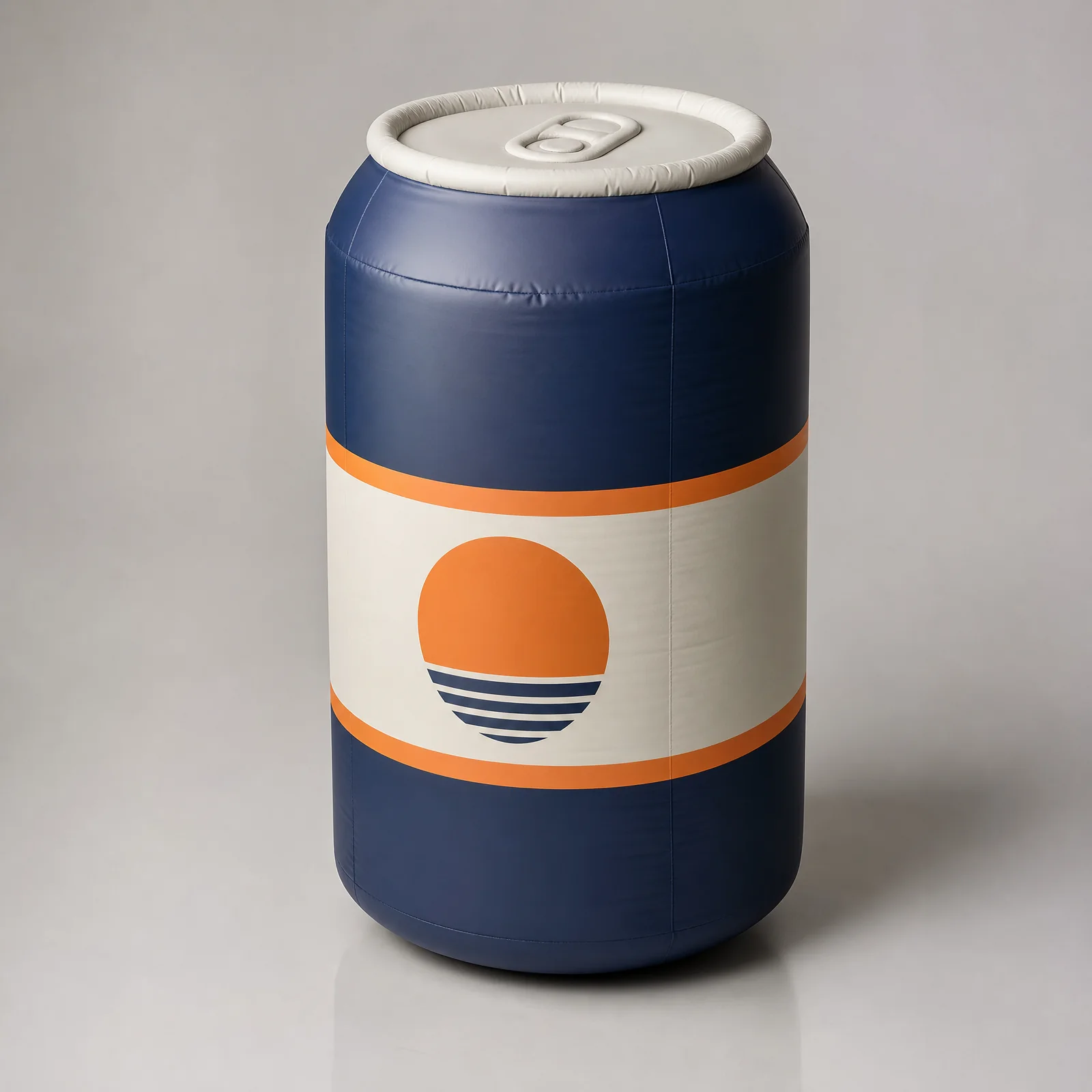
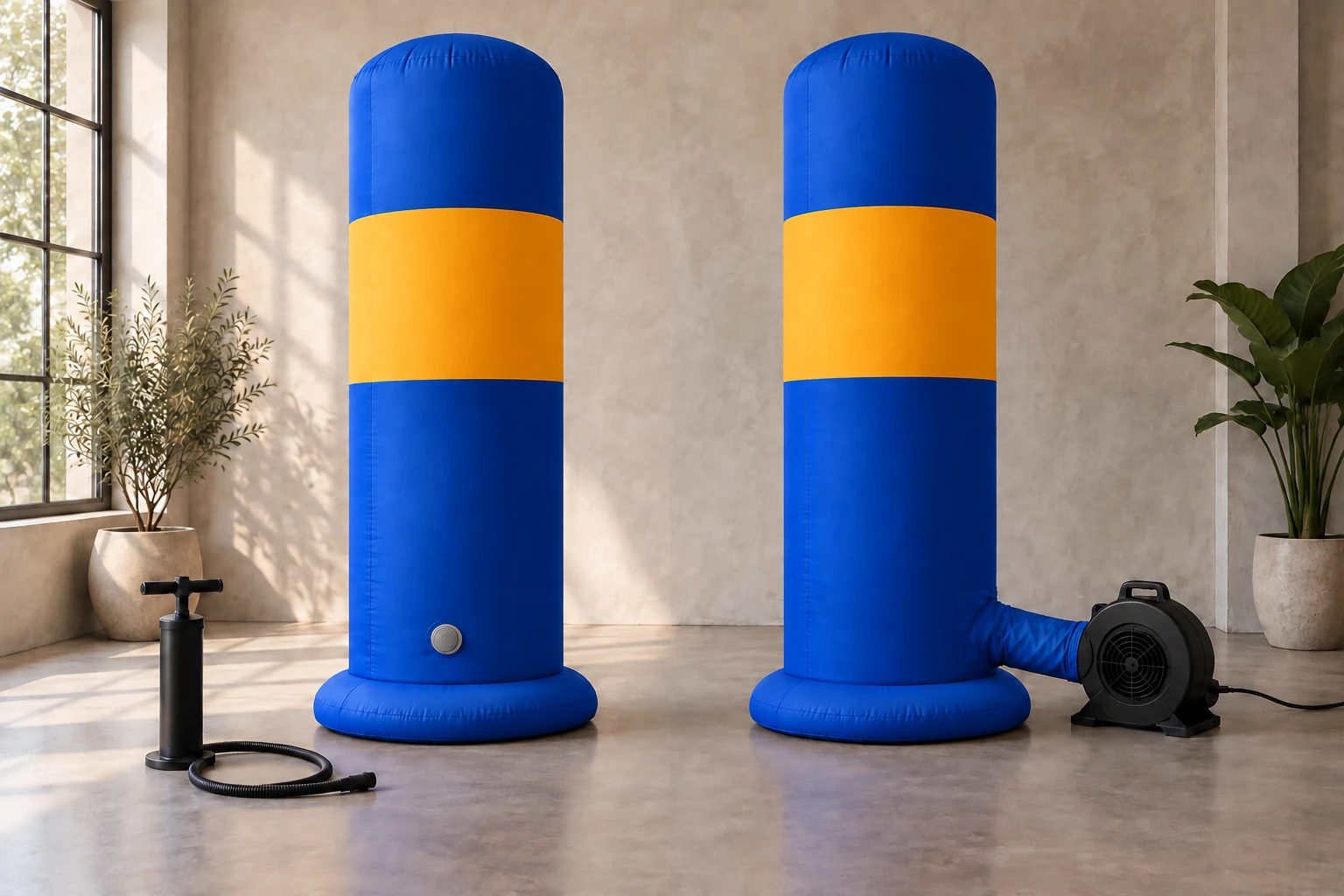
A sealed-air inflatable uses an airtight chamber or several chambers, filled through valves with a suitable pump. Once inflation is complete, the pump is disconnected and the valves retain the air. Some designs place an air bladder inside a separate outer cover; others make the visible surface part of the airtight structure.
The absence of a running blower is useful, but pressure still needs attention. Temperature changes affect internal pressure, and leaks or valve problems can cause pressure loss. Inspection and top-up requirements depend on the design and conditions. For example, Aerise’s operating FAQ calls for regular pressure checks and reinflation when needed during extended use of its inflatable tents. That is a product-specific instruction, not a universal interval for every inflatable.
Continuous air: maintain inflation with airflow
A continuous-air inflatable receives air from a blower throughout use. Air entering the structure balances air escaping through its construction, including stitched seams in many designs. The blower may be external or integrated, depending on the product.
Airquee’s operating manual documents this principle for its constant-flow equipment. The required blower, airflow and electrical supply must match the particular inflatable. Losing power or obstructing airflow can cause loss of shape, so the operating plan must address those events.
Both systems are inflatable. “Sealed” and “continuous” describe how inflation is maintained, rather than two fixed material categories.
Sealed air and continuous air, side by side
Air-system planning comparison
Swipe or scroll horizontally to review every column.
| Project consideration | Sealed air | Continuous air |
|---|---|---|
| Inflation equipment | Pump used for inflation and any required top-ups | Specified blower operates during use |
| Power planning | Confirm setup supply and access for pressure adjustments | Confirm continuous supply, equipment load and cable route |
| Sound | No continuously running inflation blower; powered setup can be audible | Operating noise depends on blower specification, placement and surroundings |
| Equipment placement | Keep valves accessible for checks and servicing | Allow for blower access, clear airflow and any connecting tube |
| Operational checks | Follow pressure, valve and condition checks | Follow blower, airflow, pressure and condition checks |
| Creative form | Review chamber layout, seams, pressure and shape feasibility | Review panel layout, airflow distribution and shape feasibility |
| Transport | Compare complete packed system, including pump and anchoring equipment | Compare complete packed system, including blower and anchoring equipment |
Use this comparison to frame a review. It cannot establish an installation’s engineering suitability.
Start with the audience experience
For a quiet retail launch, interview backdrop or presentation area, avoiding a running blower may be valuable. A sealed-air proposal deserves consideration if it can deliver the required form and practical operating arrangements. Include powered inflation and possible top-ups in the production schedule rather than promising a completely silent installation.
For a busy festival activation, continuous blower noise may be easier to accommodate. Still, check its location relative to microphones, neighbouring stands and the intended photo position. Hiding equipment behind scenery must not obstruct airflow or service access.
Think beyond the main hero photograph. Visitors may approach from the rear, queue alongside equipment or stand close enough to see seams and surface texture. Those views belong in the brief for any inflatable brand activation.
Review shape and scale before fixing the system
A large mascot, oversized package and geometric logo present different design questions. If the format itself is still undecided, compare inflatable product replicas with rigid props or wearable mascots with static displays first. Ask which details need to be three-dimensional, which can be printed, and which must stay legible from the intended viewing distance.
Request a review of the proposed silhouette, fine features, chamber or panel divisions, attachment points and artwork placement. Avoid assuming that one air system always produces sharper detail or that the other is automatically better at large scale. The useful comparison is between feasible proposals for the same brief.
Material names alone cannot settle the decision. PVC-coated textiles can appear in continuous-air construction, while sealed designs may combine an inner bladder with a textile cover. The InflatPro material comparison explains why base fabric, coating and joining method should be specified separately.
Check the venue and the operating day
For continuous air, confirm the proposed electrical equipment with the venue’s responsible technical team. Establish power availability throughout display hours, acceptable equipment locations and protected cable routes. Agree what happens if the supply is interrupted.
For sealed air, confirm how the crew will reach the valves, check pressure and carry out permitted adjustments. Removing a blower from the floor plan does not remove the need for an operating plan.
Both proposals need a site-specific review of stability, anchoring or ballast, public clearance and weather exposure. Indoor placement does not automatically eliminate securing requirements. Outdoor use needs defined operating limits, monitoring responsibilities and a shutdown procedure appropriate to the actual installation.
The UK HSE’s sealed-inflatable operator guidance explains the connection between temperature and pressure. Its scope includes public-use recreational equipment; its detailed rules should not be transferred in full to a decorative brand display. Obtain the documentation, engineering review and venue approval appropriate to your project and location.
Compare the whole deployment cost
Ask for packed dimensions, total handling weight, crew requirements and the full equipment list. Include transport cases, pump or blower, securing equipment and any electrical accessories in the comparison.
Neither system ensures a lighter shipment or quicker pack-down. Chamber layout, material, size, deflation arrangements and the available working area all matter. Plan for inspection, drying and storage in accordance with the supplied instructions.
For a touring campaign, compare each venue’s power arrangements, setup windows and storage constraints. A lower purchase quotation may require more venue services or crew time. A proposal that reduces operating power may introduce different inspection and handling requirements. Evaluate the complete campaign schedule.
Six questions to include in your project brief
- What is the installation’s role: a display, photo backdrop, entrance feature or interactive structure?
- Which shape details, dimensions and camera views are essential?
- Where will it operate, and what power, sound and equipment-placement restrictions apply?
- How many hours per day and how many event days are planned?
- Who will install, monitor and pack it, and what training or documentation do they need?
- What information must the venue approve, and by what date?
Attach concept references, a site plan, destination, event date and intended reuse schedule. If both systems remain possible, ask for a comparison against these same requirements.
Request a project review
Share the creative direction, intended size, venue conditions and operating schedule. Include any restrictions on continuous power or sound so they can inform the air-system discussion from the beginning.