A visual idea without site information
Early concepts may be strong while dimensions, access, power, or installation conditions remain open.

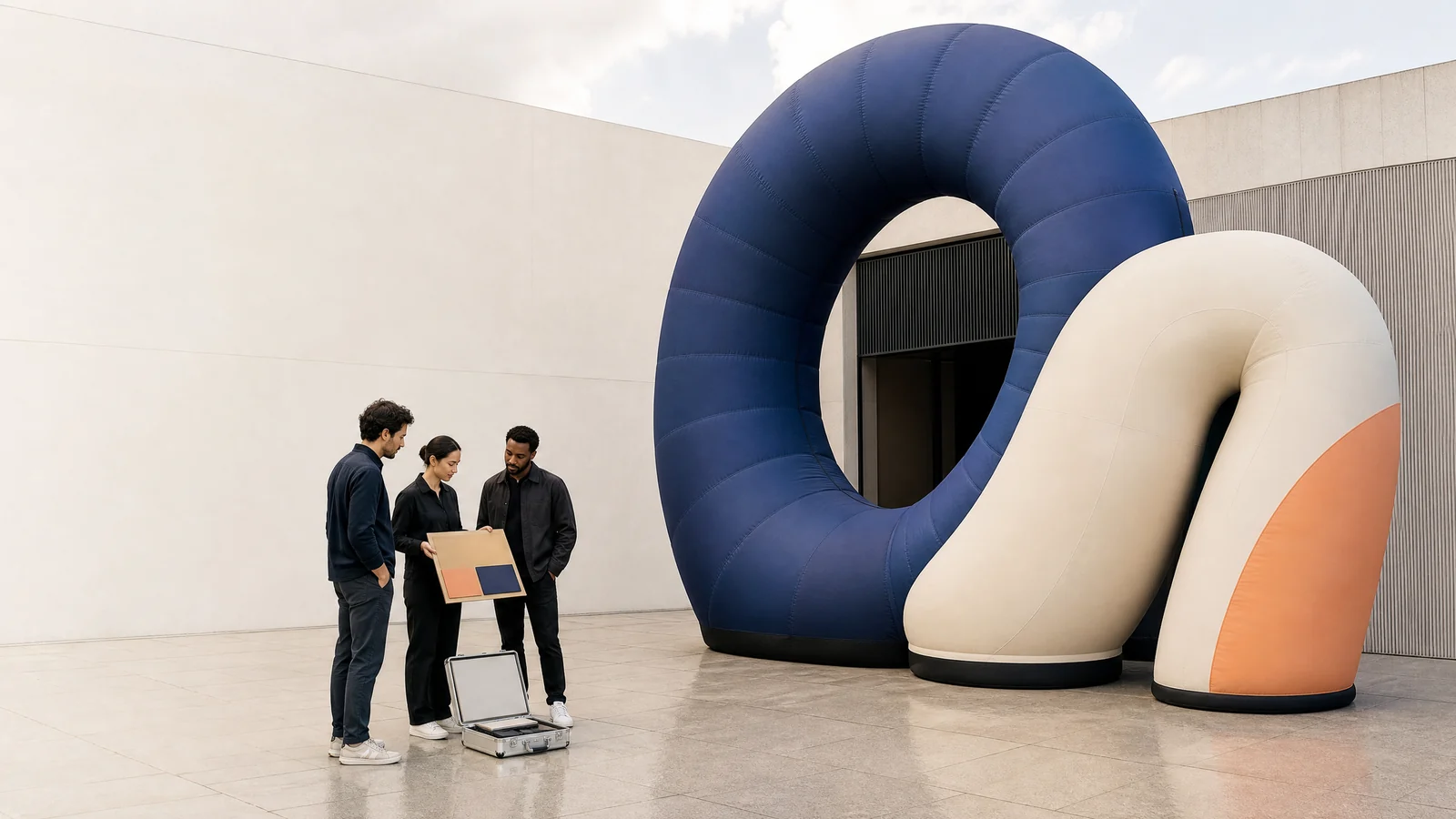
Industry / Marketing Agencies
Marketing agencies often need a physical execution partner who can interpret campaign intent, structure review decisions, and keep venue questions visible without taking over the agency-client relationship.
Illustrative concept / design reference
Working context
The same physical form creates different review needs depending on who owns the campaign, venue, approvals, and live operation.
Early concepts may be strong while dimensions, access, power, or installation conditions remain open.
Creative, account, client, event, venue, and production stakeholders need a review path that distinguishes visual choices from site responsibilities.
Artwork and brand cues need to remain recognisable when translated from flat assets into volume, distance, and multiple viewpoints.
Relevant solutions
These links point to existing InflatPro pages with their own project context and enquiry route.
Collaboration in practice
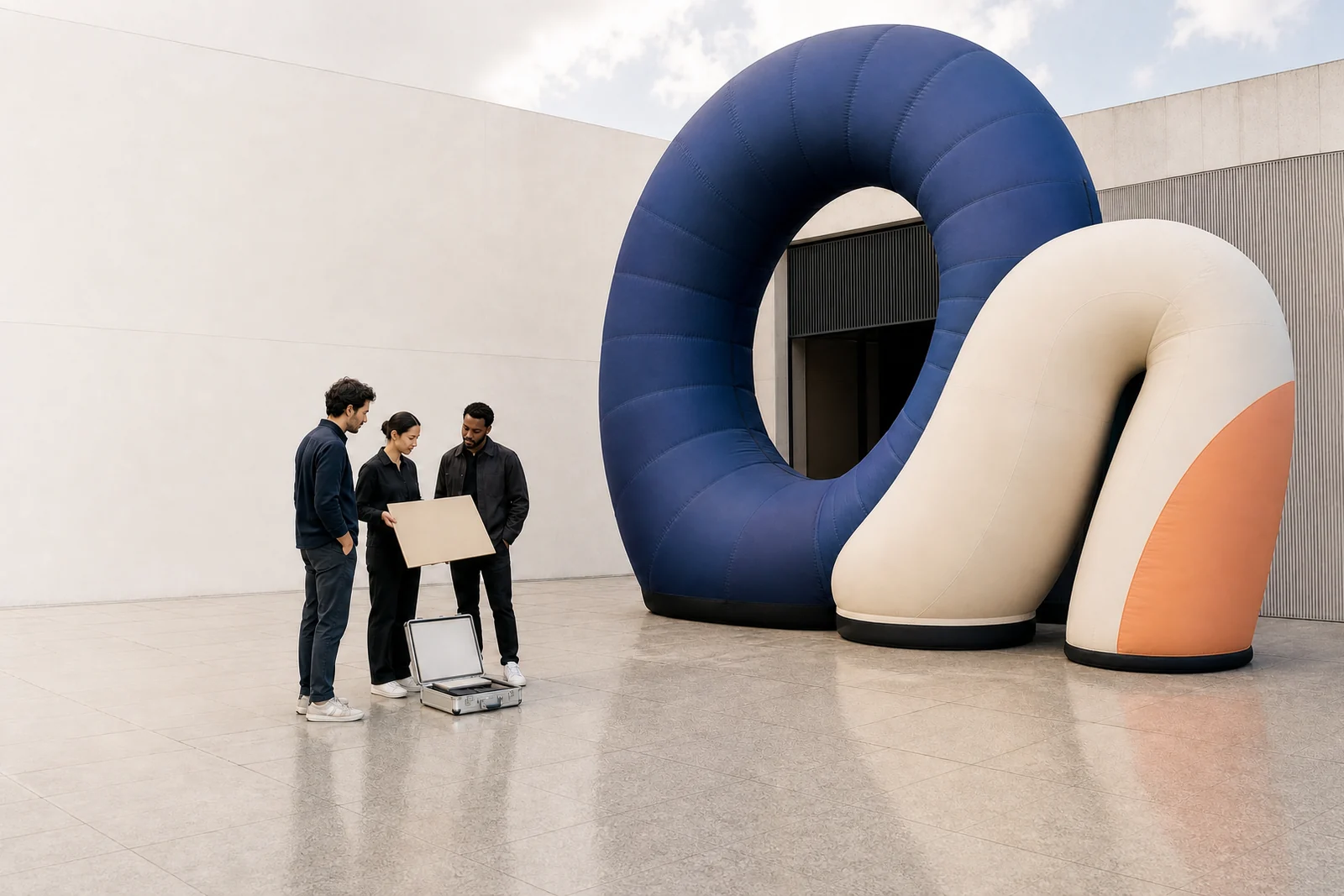
01 / Development focus
The agency can retain control of client communication while visual references, dimensions, artwork questions, and venue dependencies are documented for the physical project.

02 / Development focus
Priority messages, logo clear space, viewing distance, seams, and curved surfaces need review against the actual form rather than a flat mock-up alone.
Information to prepare
A useful brief does not need every answer, but it should show what is known, what is directional, and who will confirm the site-specific items.
Campaign or event role, target audience, destination, date, and the internal decision-makers involved.
Available plans, site photographs, usable dimensions, access information, and indoor or outdoor context.
Approved or rights-cleared artwork, brand guidance, reference imagery, and the files still awaiting approval.
Expected public interaction, operating hours, power context, setup and pack-down windows, and local contractor roles.
The venue, organiser, or local qualified professional responsible for site approval and destination-specific documentation.
A responsibility record naming the client approver, agency coordinator, production contact and venue/installation lead, with each party accepting its tasks and outstanding decisions.
Packing and transport questions: when package dimensions, weights, counts and labels will be available; included transport stages; receiving/unloading access; and the party handling customs and local charges where applicable.
A repeat-use plan identifying who checks condition, records damage, cleans and dries the installation, packs and stores it, and confirms suitability and approvals at each new site. Treat support and delivery dates as subject to the agreed scope.
Working sequence
Use a dated brief to record the campaign role, product references, quantity, destination and requested dates. The client confirms rights-cleared brand assets and the decision maker; the agency consolidates comments and identifies unresolved inputs. Agree this responsibility split for the project rather than assuming it is included.
Ask the production team for the agreed views, dimensions, simplified details and configuration questions. The client or brand approver signs off the intended appearance through the agency. Record the revision and scope of approval; a visual approval does not confirm venue or technical acceptance.
Confirm the artwork revision, colour reference and placement on the developed volume. Agree which pre-dispatch photographs, checks and equipment records the production team will provide, and who reviews them. Changes after approval need a recorded impact review before the revised direction is treated as agreed.
Confirm packing information, transport scope, receiving and unloading contacts, and setup/removal windows. The venue and appointed local team confirm site approvals, power, fixing or rigging and operation. For reuse, name the owner of condition checks, cleaning, drying, storage and the next venue review; do not assume one site approval transfers to another.
Related planning resources
Project-specific FAQ
Yes. Identify what is approved, what is directional, and what still depends on the venue or client. The review should not present open decisions as fixed specifications.
The agency controls its client relationship. InflatPro can provide project-specific visual and technical-development information for the agency to use within its own approval process.
Avoid fixing dimensions, installation method, outdoor operation, delivery timing, or destination documentation until the actual scope and responsible local parties have been reviewed.
Start a project review
Use the form to identify this buyer context and attach the references already available. Open site questions can remain clearly marked.