Festival gateways and landmarks
Support arrival, orientation, or a central meeting point across long sightlines and changing audience density.

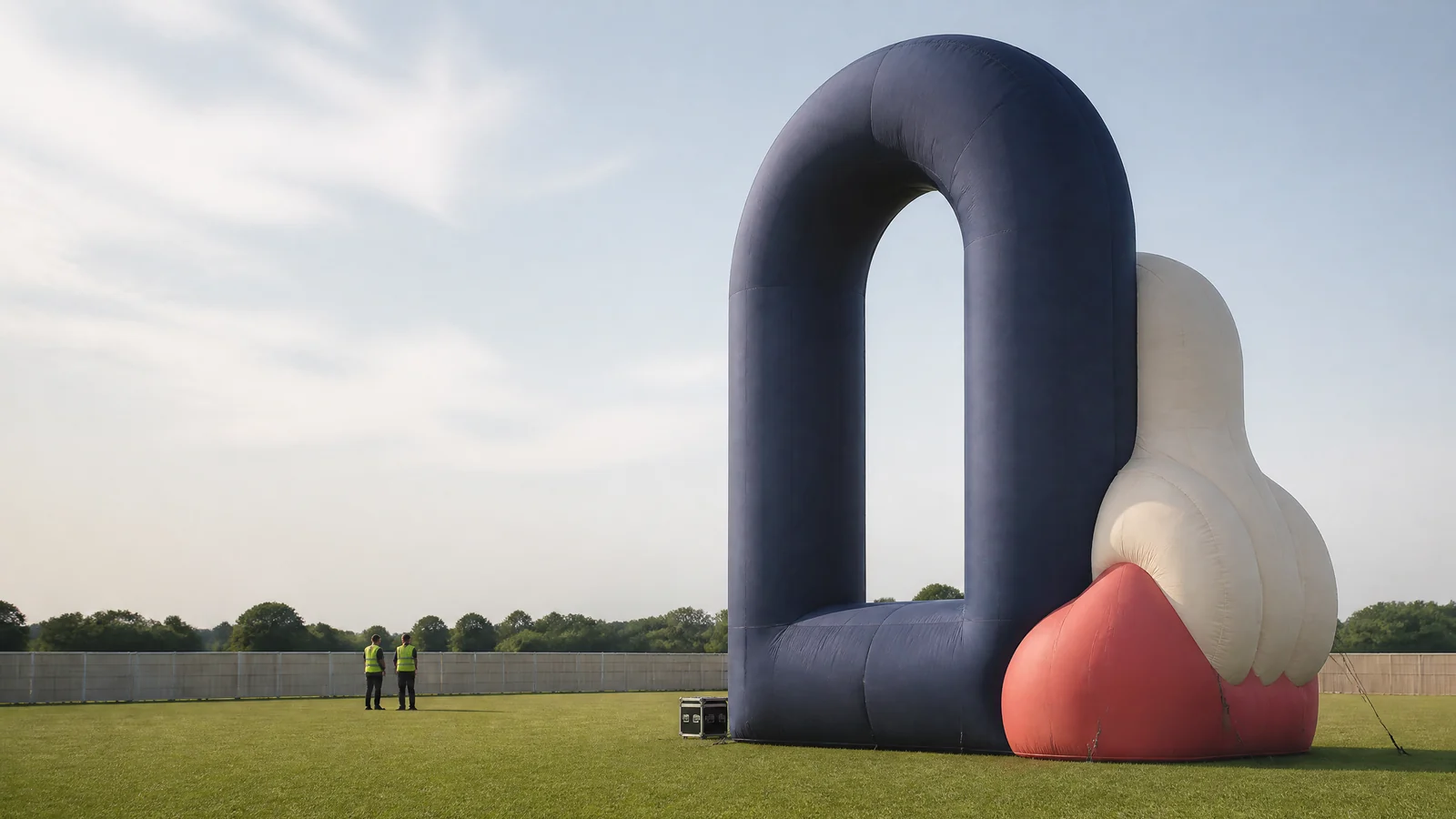
Solution / Festival & Outdoor Installations
Festival and outdoor installations create visible arrival, stage, sponsor, art, and wayfinding moments across open sites where weather, public access, power, and setup windows are central to the brief.
Illustrative concept / design reference
Where it fits
The format should follow the audience moment, physical setting, and project responsibilities rather than a predefined format choice.
Support arrival, orientation, or a central meeting point across long sightlines and changing audience density.
Create a strong form for public space while planning viewing distance, supervision, access, and neighbouring programme areas.
Relate scenic scale to audience zones, production access, lighting, sound equipment, and emergency routes.
Relevant forms
These links point to existing InflatPro pages with their own project context and enquiry route.
Design and site context
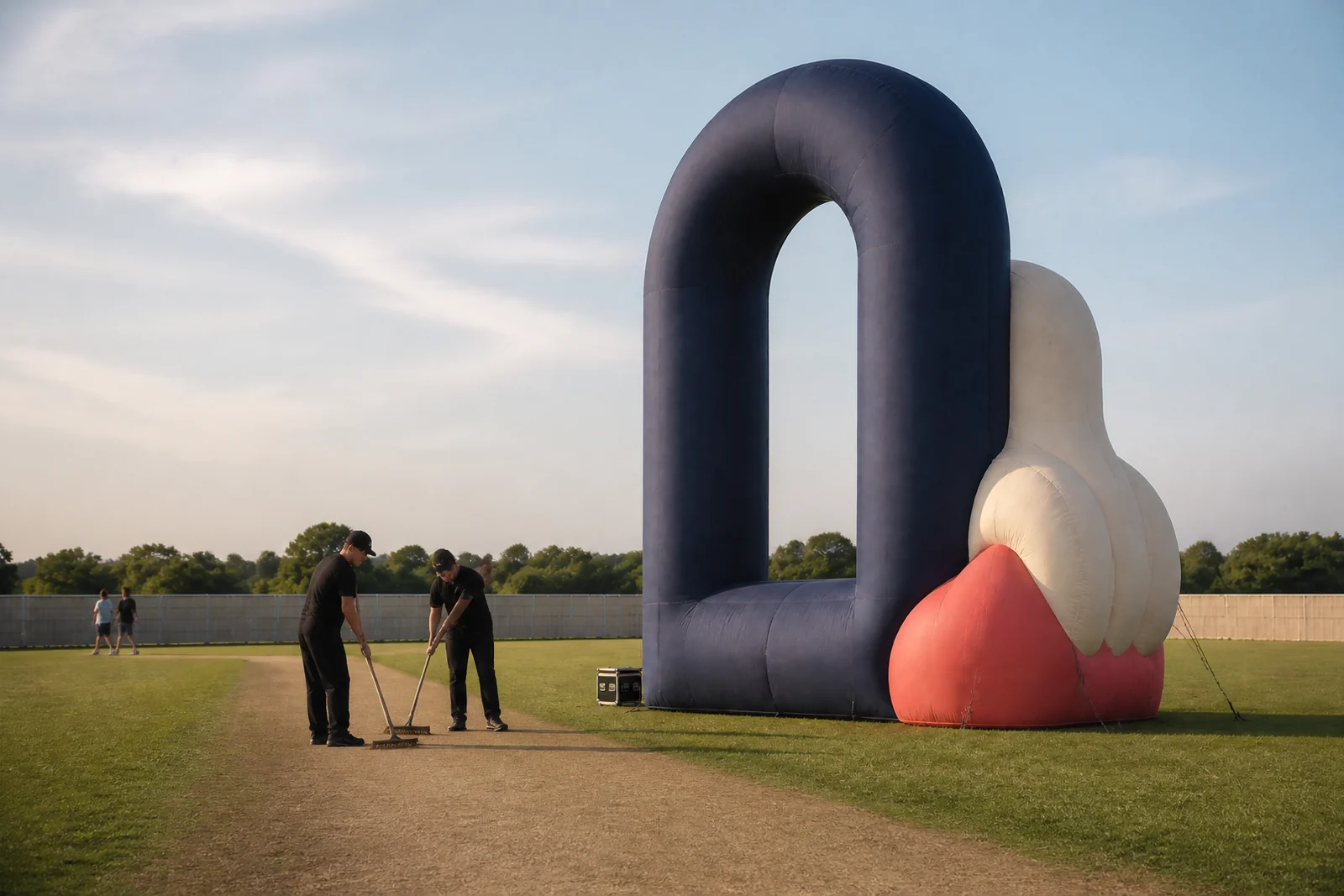
01 / Development focus
Approach distance, terrain, surrounding structures, stage scale, sunlight, night lighting, and audience routes affect the viable silhouette and artwork hierarchy.
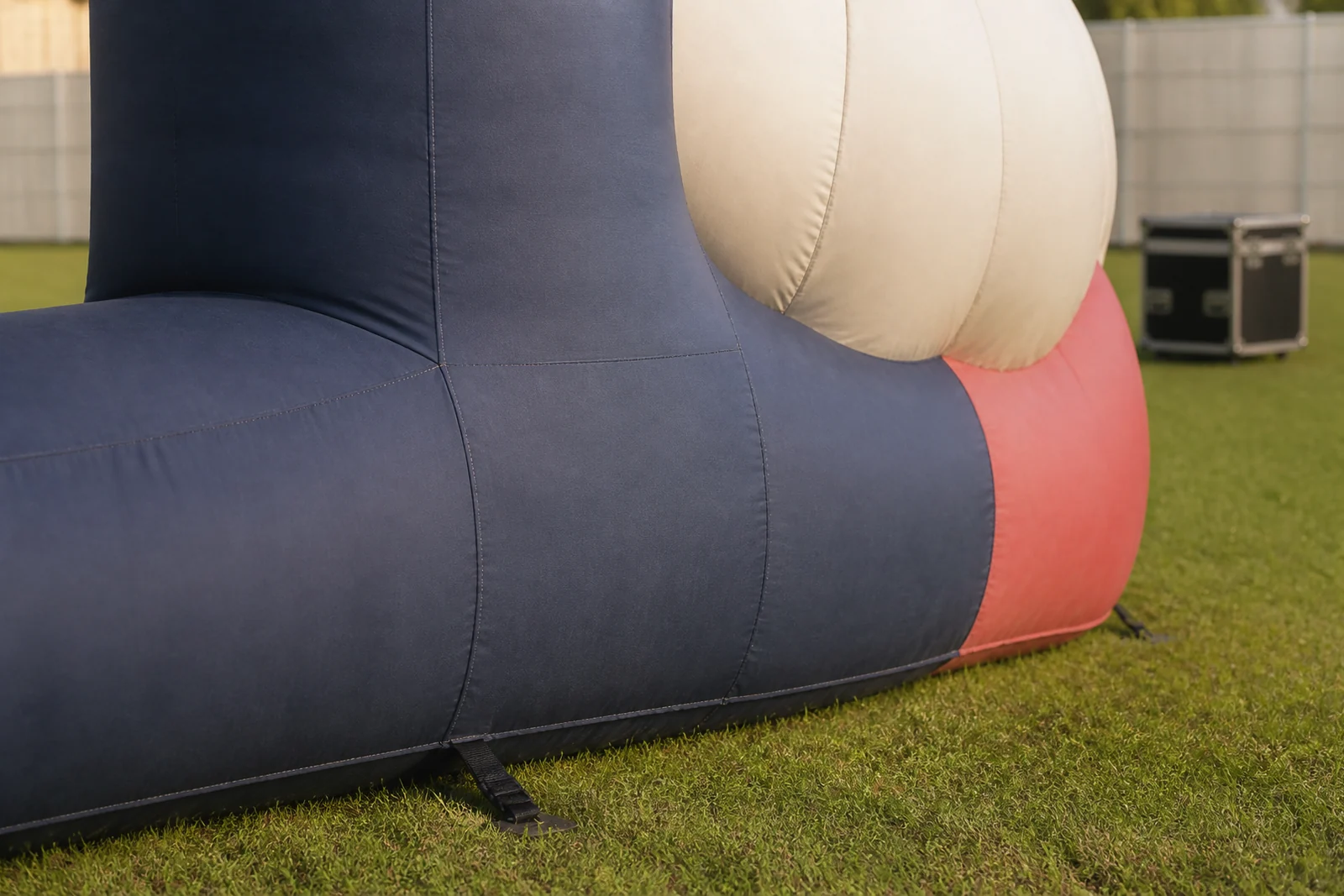
02 / Development focus
The organiser and local qualified professionals must define acceptable conditions, monitoring, anchoring or ballast, shutdown actions, exclusion areas, and supervision for the specific site.
Project planning
No page can determine venue approval or operating conditions without the actual site and responsible local teams.
Share the usable footprint, clear height, access route, and any restricted zones rather than only the overall venue dimensions.
Confirm whether the setting is indoors or outdoors and identify exposure, public access, operating hours, and nearby structures or equipment.
Confirm the proposed power source and operating position for any blower-based format; the venue team must approve the final electrical arrangement.
Treat anchoring, ballast, fixing points, wind conditions, and audience separation as project-specific items for the venue and local qualified professionals to confirm.
Review freight access, storage, setup and pack-down windows, and the team responsible for receiving and handling the packed installation.
Working sequence
Define what the installation needs to do, who will encounter it, the destination, the event date, and the review stakeholders.
Review references, artwork, intended scale, viewing directions, and the product or spatial format before fixing the execution.
Check available dimensions, access, indoor or outdoor context, power, public interaction, and the venue information still to be confirmed.
Align the selected direction, supplied files, responsibilities, packing expectations, and approval sequence before production planning.
Coordinate approved files, project milestones, packing information, delivery handoff, and the installation information required by the project team.
Related planning resources
Project-specific FAQ
No. The actual site, dimensions, exposure, fixing or ballast strategy, power, operation, public access, and local requirements must be reviewed for the proposed use.
The organiser, venue, site safety team, and local qualified professionals must define operating limits, monitoring, shutdown, and evacuation actions for the specific event.
Provide a site plan, installation zone, access route, surface information, available fixing information, power, programme times, public routes, destination, and event dates.
Start a project review
Use the form to identify this solution and attach the references already available. Open site questions can remain clearly marked.