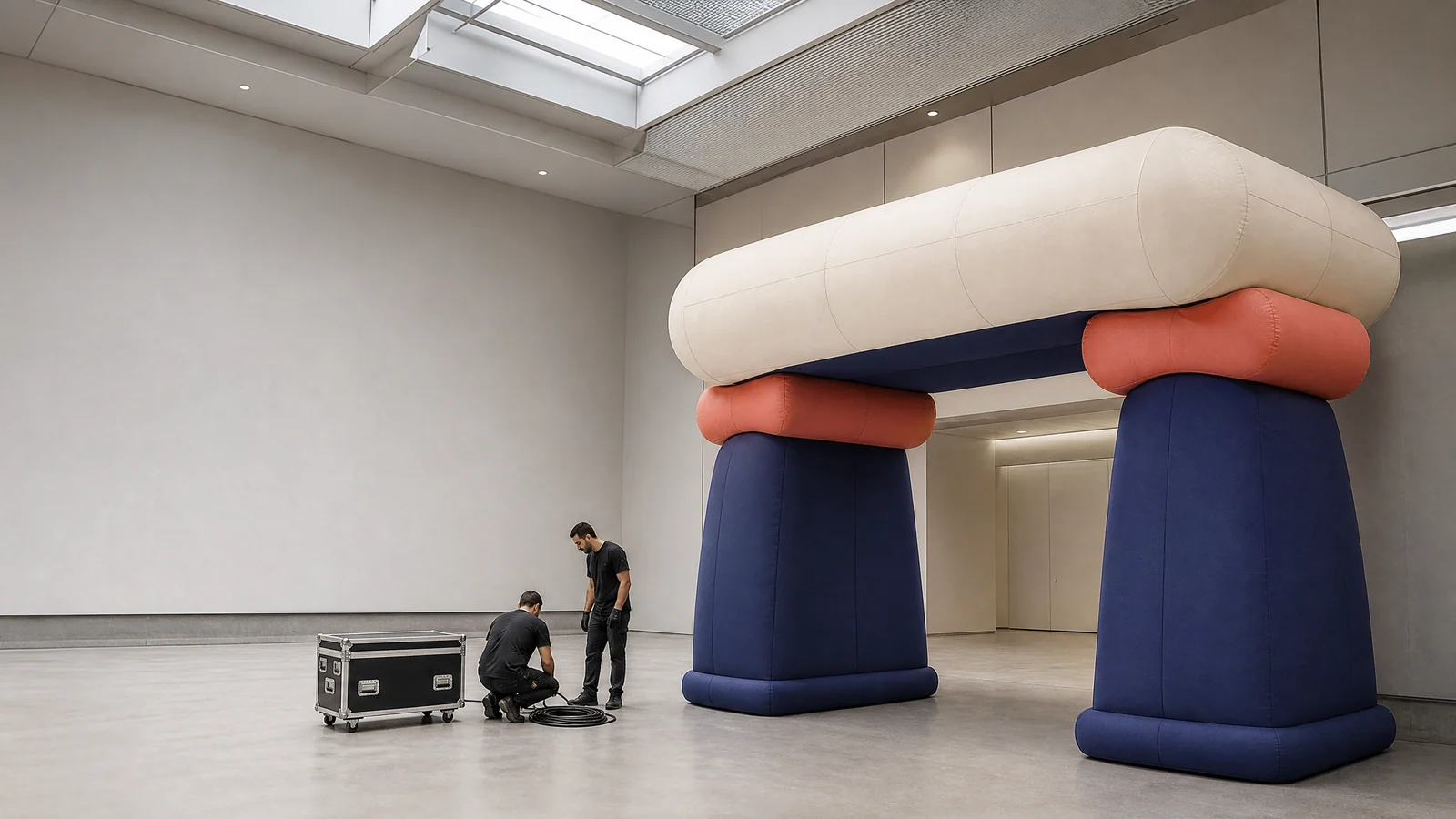
Access is discovered late
Loading routes, doors, lifts, floor protection, working hours, and final placement can change the viable form or setup sequence.

Industry / Event Agencies
Event agencies need the visual direction, venue constraints, partner responsibilities, and live operating plan to move together through a compressed approval and delivery sequence.
Illustrative concept / design reference
Working context
The same physical form creates different review needs depending on who owns the campaign, venue, approvals, and live operation.
Loading routes, doors, lifts, floor protection, working hours, and final placement can change the viable form or setup sequence.
Artwork, venue answers, approvals, production, freight, and installation responsibilities need a realistic sequence based on the actual project.
Stage, lighting, rigging, electrical, security, venue, and local production teams can each affect clearances and operating conditions.
Relevant solutions
These links point to existing InflatPro pages with their own project context and enquiry route.
Collaboration in practice
01 / Development focus
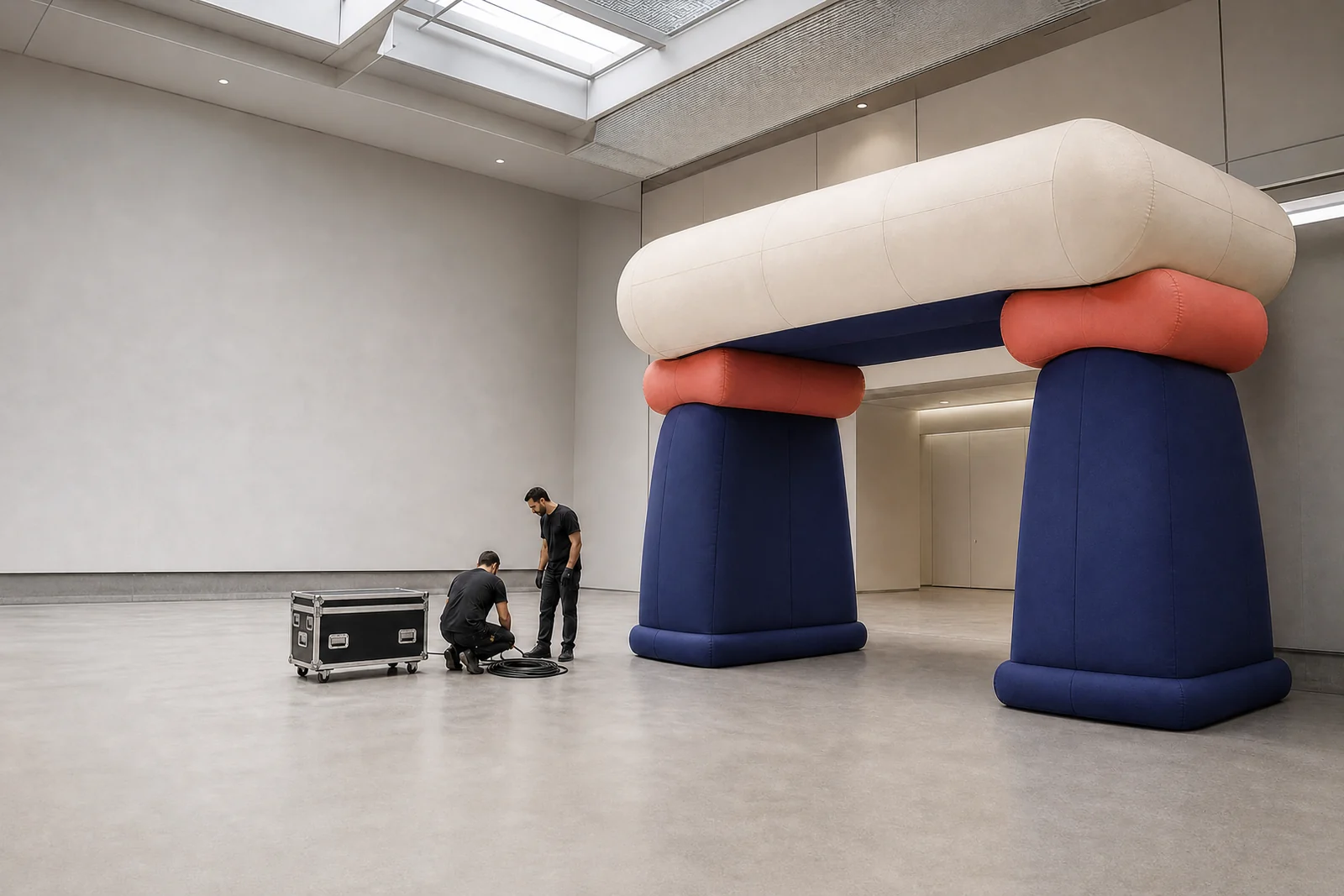
Loading, doors, lifts, floor protection, final position, power, and contractor access can change both the viable form and the installation sequence.

02 / Development focus
Setup, inspection, public separation, power, fixing, operation, and pack-down need named owners across the event, venue, and local contractor teams.
Information to prepare
A useful brief does not need every answer, but it should show what is known, what is directional, and who will confirm the site-specific items.
Campaign or event role, target audience, destination, date, and the internal decision-makers involved.
Available plans, site photographs, usable dimensions, access information, and indoor or outdoor context.
Approved or rights-cleared artwork, brand guidance, reference imagery, and the files still awaiting approval.
Expected public interaction, operating hours, power context, setup and pack-down windows, and local contractor roles.
The venue, organiser, or local qualified professional responsible for site approval and destination-specific documentation.
Working sequence
Separate the confirmed project purpose from open creative and site decisions.
Read the proposed form against scale, access, audience movement, operating conditions, and approval requirements.
Keep artwork, dimensions, visual direction, and comments moving through a named approval path.
Coordinate production information, packing, delivery, setup context, and the responsibilities retained by the venue and local teams.
Related planning resources
Project-specific FAQ
Share plans and photographs, usable dimensions, access, surface, power, fixing restrictions, public interaction, build and breakdown windows, and the venue approval contact.
Early creative review can proceed if open site questions are recorded. Production and operating decisions should not rely on assumptions that the venue has not confirmed.
The organiser, venue, appointed contractors, and local qualified professionals confirm site approval, installation method, electrical arrangements, anchoring or ballast, and local documentation.
Start a project review
Use the form to identify this buyer context and attach the references already available. Open site questions can remain clearly marked.