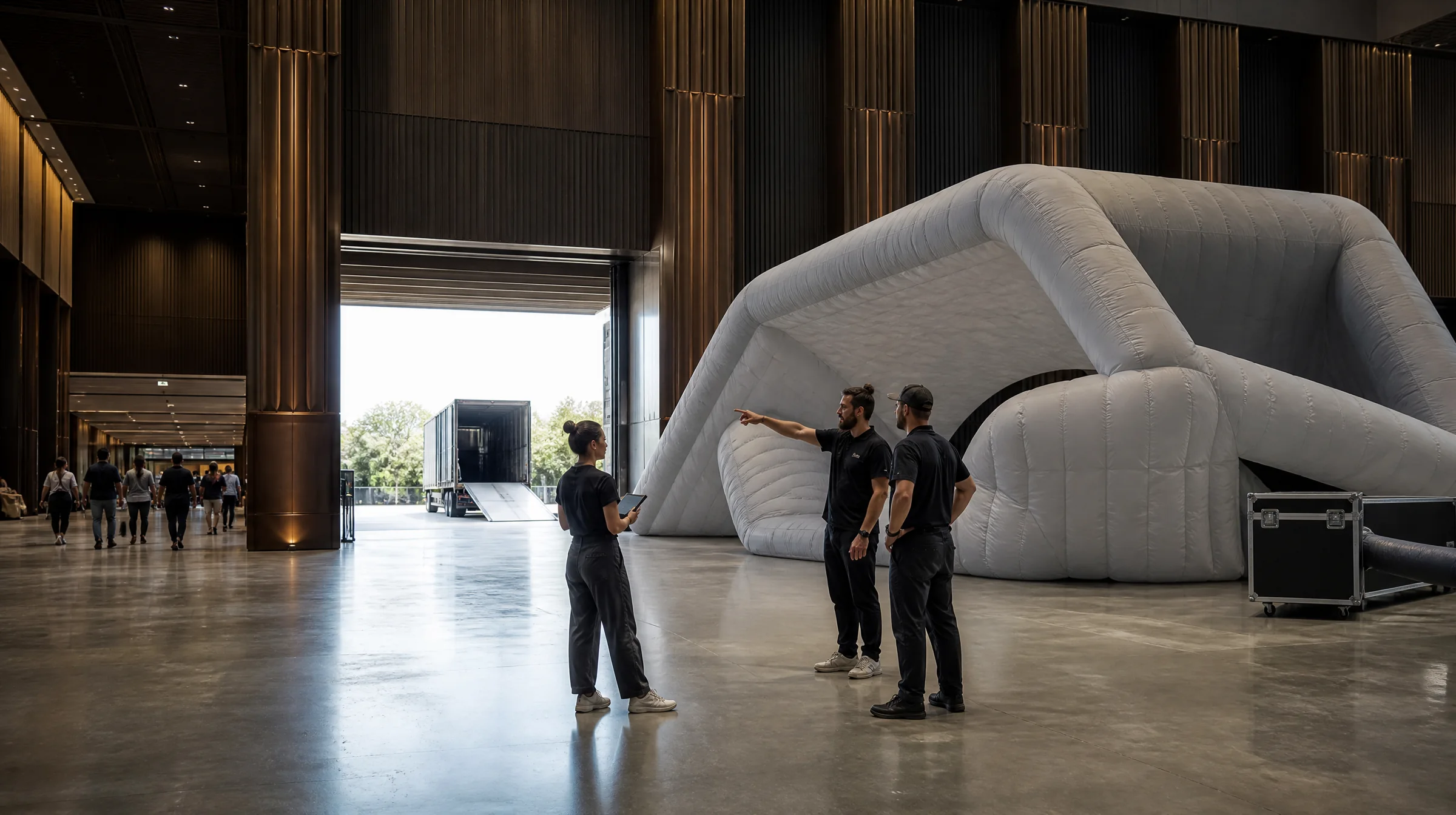
Read the Access Route, Not Only the Final Room
A final installation area may look generous while the actual loading route introduces the constraint. Door widths, lift sizes, turns, loading times, vehicle access, and protected circulation routes all affect how a project can reach the site and be prepared there.
The review should therefore include the route from arrival to installation, not only a plan of the finished space.
Treat Anchoring and Stability as Project-Specific
The structure, dimensions, site, ground or floor conditions, venue requirements, weather exposure, and operating plan determine the appropriate stability approach. A generic anchoring prescription cannot account for all of those variables.
Where a verified project limit has not been established, it should not be replaced by a generic number. The installation plan must follow the approved project conditions and the venue or operator requirements.
Keep Operations in the Same Review
Audience movement, emergency access, power, supervision, inflation equipment, planned operating hours, and deflation or removal procedures are part of the physical plan. They should be visible before the installation reaches a site team.
A strong review turns those conditions into questions that can be confirmed with the relevant venue and project partners.