Decide what needs to look real
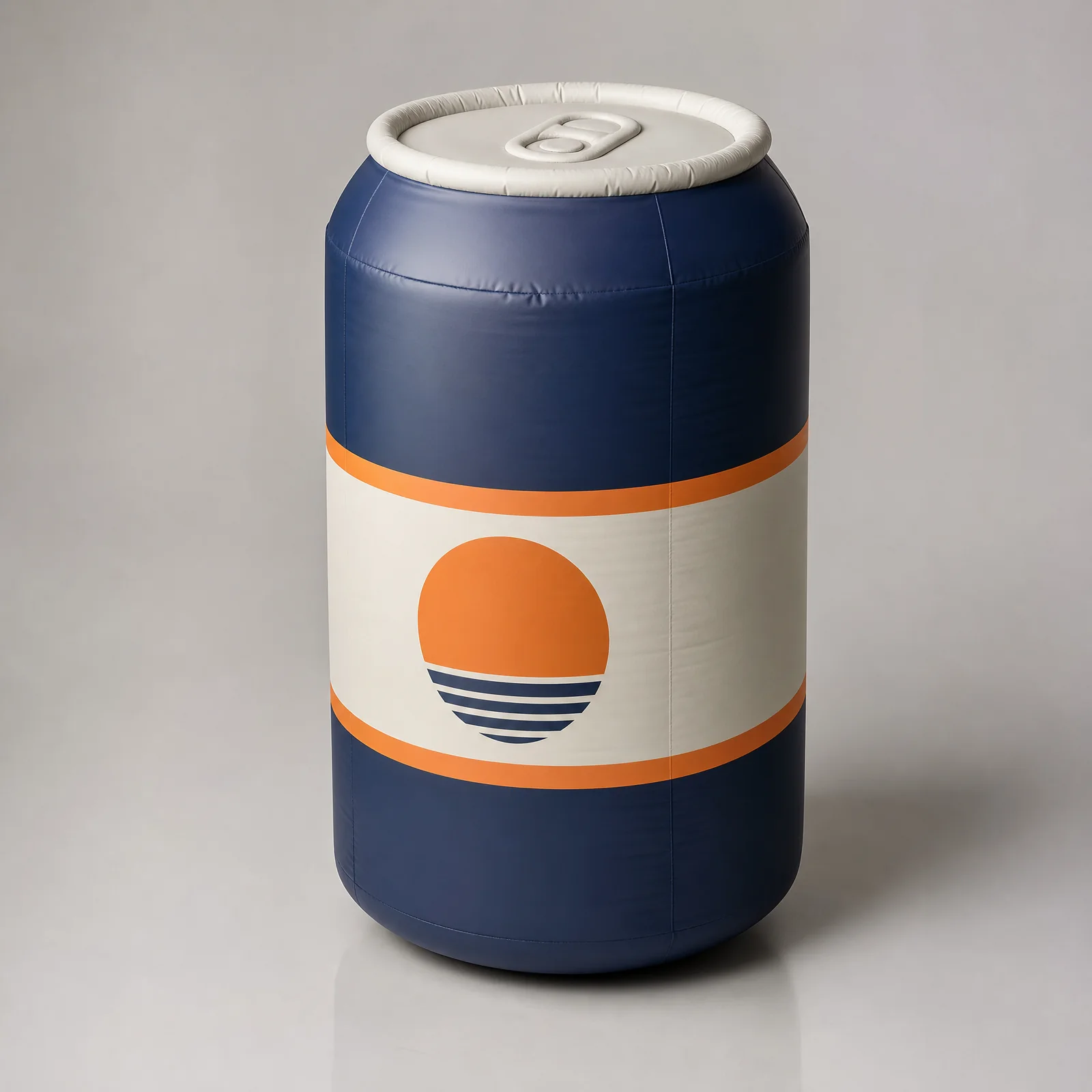
A replica can be convincing without reproducing every physical feature of the original package. From across an event space, proportion, colour blocking and the main label may carry recognition. At a press photography position, a cap edge or shoulder profile may become much more important.
With an inflatable, discuss where the developed shape will soften corners, introduce seams or alter a flat label surface. Bottles, cans and pouches offer different design opportunities; the package category alone does not establish feasibility. Ask for views from the intended audience and camera positions, including the sides that visitors can actually see.
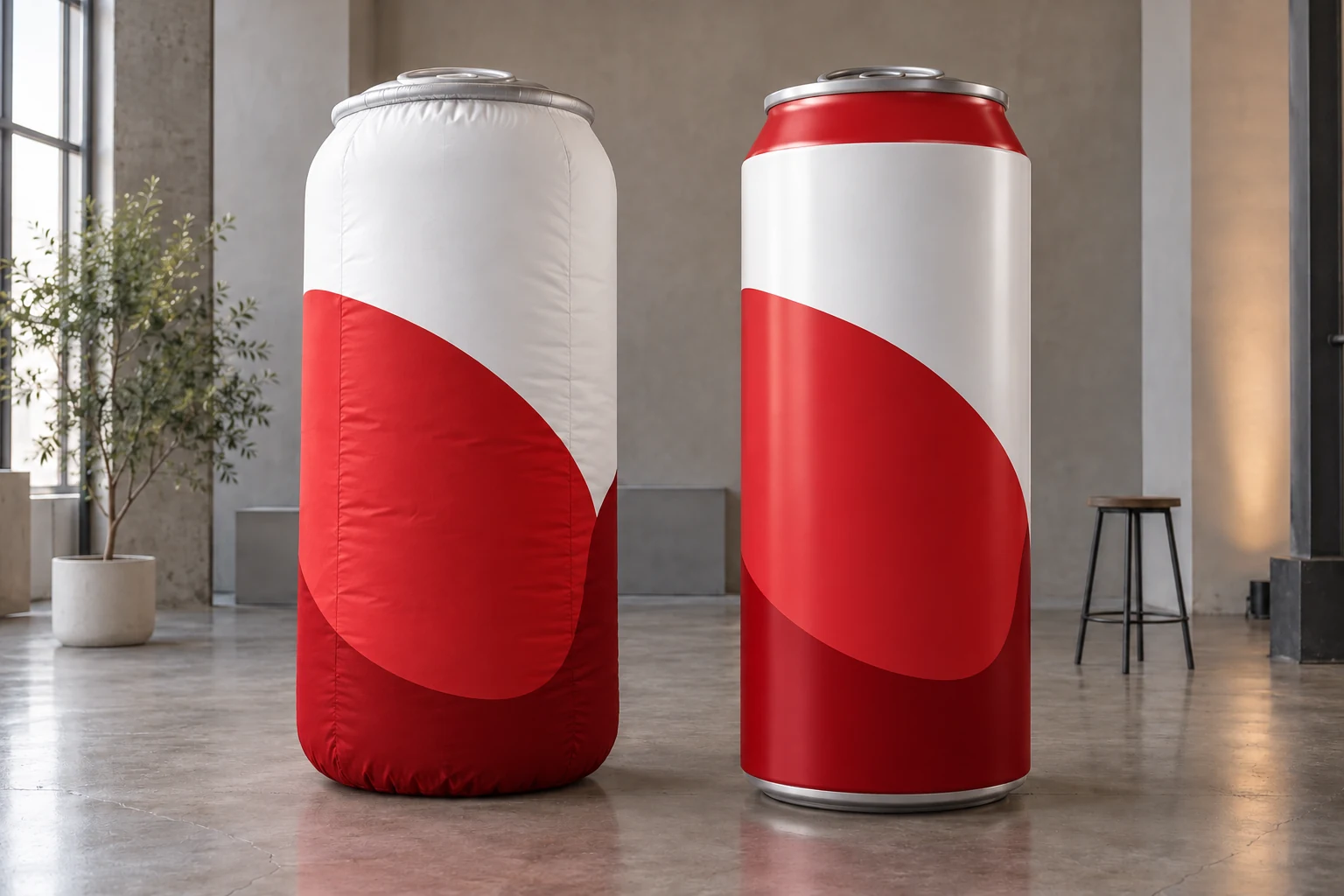
A rigid approach gives a scenic fabricator different ways to form edges, recesses, closures and surface details. It is worth evaluating when an angular carton, sculpted cap or transparent bottle wall is central to the creative concept. However, rigid construction does not automatically produce retail-pack realism. Joints, finish quality, reflections and the selected fabrication process still matter.
Nor does rigid necessarily mean solid and heavy. For example, Smooth-On describes rigid casting foams used for lightweight and hollow castings. Compare proposed constructions, rather than assuming every rigid option is a solid block.
A useful approval test: identify the feature that would make the brand team reject the replica. Review that feature in a sample or relevant physical test before approving the overall appearance from a rendering alone.
Match the format to the audience encounter
For a launch landmark, an oversized inflatable interpretation may deliver the intended product recognition while allowing the creative team to emphasise scale. This is a strong direction to explore when the object is primarily seen from a distance or included in wide event photography.
For a premium window or close-up press set, a rigid proposal may be worth prioritising when the brief depends on crisp geometry or a particular optical finish. Request finish samples under representative lighting. A glossy rendering cannot establish how a real surface will photograph.
Some campaigns benefit from both: a large inflatable marker for the wider setting and a separate detailed prop beside the sampling or photography area. Treat that as two defined display roles, with coordinated artwork and clear responsibility for each build.
Explore InflatPro's inflatable product replica directions when assessing the inflatable part of the concept.
Compare the installed footprint
The visible object is only part of the space required. Include supports, anchoring or ballast, operating equipment, public separation and installation access in both proposals.
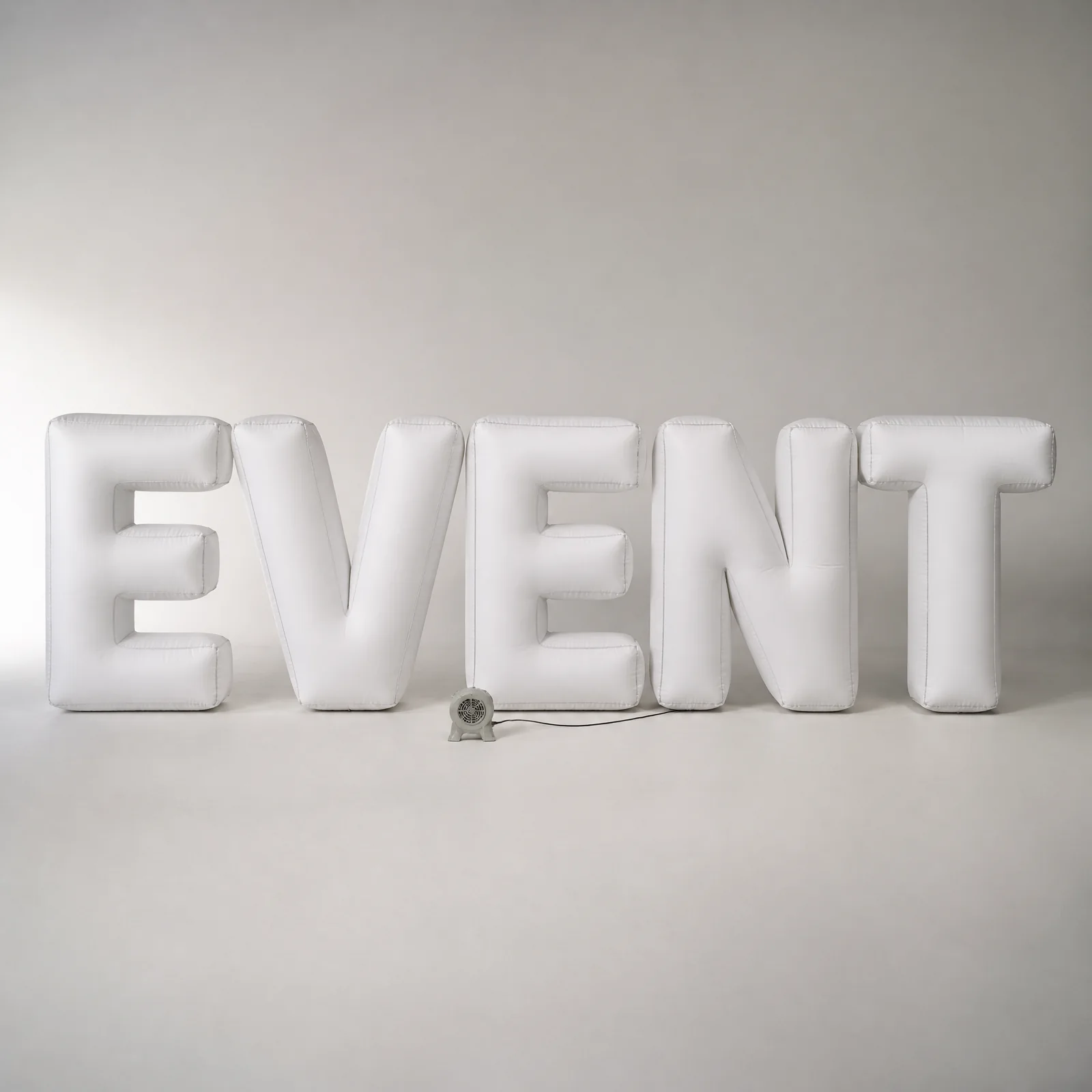
A blower-supported inflatable needs a continuous air supply during operation. Our sealed-air and continuous-air comparison explains the operating differences. A sealed-air proposal has a different operating arrangement, which still needs confirmation for the display duration and conditions. Ask where equipment will sit, how it can be accessed and whether its sound matters near interviews or presentations.
A rigid prop may avoid inflation equipment but still need a base, internal support, lifting provision or power for lighting. Its weight alone is not evidence that it will remain stable.
The UK's Health and Safety Executive identifies ground or floor capacity, anchoring conditions, circulation and wind exposure as relevant to event venue and site design. Its event electrical guidance also addresses equipment protection and cable routing. These are useful planning references; the actual installation must follow its venue requirements and applicable local rules.
If either proposal relies on an unconfirmed fixing point, an obstructed access route or unavailable power, resolve that before treating the visual concept as an approved solution.
Follow the object through pack-down and reuse
An inflatable body can be deflated for transport, but the packing comparison must include its entire kit. Ask for the proposed packed dimensions, package weights and separate equipment list. Include bases, blowers, restraints and protective packing where applicable.
For a rigid option, establish whether it travels assembled or in sections. A sectional build may improve access but adds connections, assembly work and potential finish touch-ups. Confirm the largest component that must pass through loading doors, lifts and corridors.
Then consider the next appearance. Who inspects the object after pack-down? How will it be cleaned, stored and checked before dispatch? What happens if it returns wet or with visible damage?
Inflatable skins can need attention to abrasion, seams or air retention. Rigid surfaces and joints can need repair or refinishing after handling. Neither deserves a blanket durability advantage without knowing its construction and treatment. Request an inspection and repair plan appropriate to the proposed build, especially when local crews will change between venues.
Compare campaign scope before comparing price
A fabrication-only quote and a ready-to-install quote are not equivalent. Ask both project partners to make the following visible:
- Design development and the physical samples needed for approval
- The object, operating equipment, supports and protective packaging
- Freight assumptions, local handling and installation responsibilities
- On-site assembly, checks, supervision and pack-down requirements
- Storage, maintenance and preparation for later appearances
An inflatable's packing advantages may matter more on a touring campaign than in a single fixed display. A detailed rigid finish may justify additional handling when it is central to the campaign photography. Neither point establishes which option is cheaper overall. Compare quotes against the same activation schedule and acceptance criteria.
For the detailed inputs to an inflatable enquiry, use the existing product replica briefing guide.
Make the choice around the non-negotiable
Prioritise inflatable development when recognisable scale and repeat deployment lead the brief, provided the shape and site review support it. Prioritise a rigid scenic proposal when exact edges, transparent components or close-up finish are essential. Keep both under review when the visual requirement and deployment plan pull in different directions.
Share the package reference, audience viewpoint and campaign itinerary with InflatPro to assess the inflatable direction. Request a Project Review.