
Send Inquiry

Australian Site Conditions

Weather and Site Context for Australian Outdoor Activations

In Australia, the site context—rather than the product itself—dictates the technical specification of an inflatable installation. Whether deploying a brand pavilion on the Gold Coast or a sculptural activation in Melbourne’s CBD, success depends on analyzing the interplay between four environmental variables: UV intensity, thermal peaks, wind patterns, and coastal humidity.

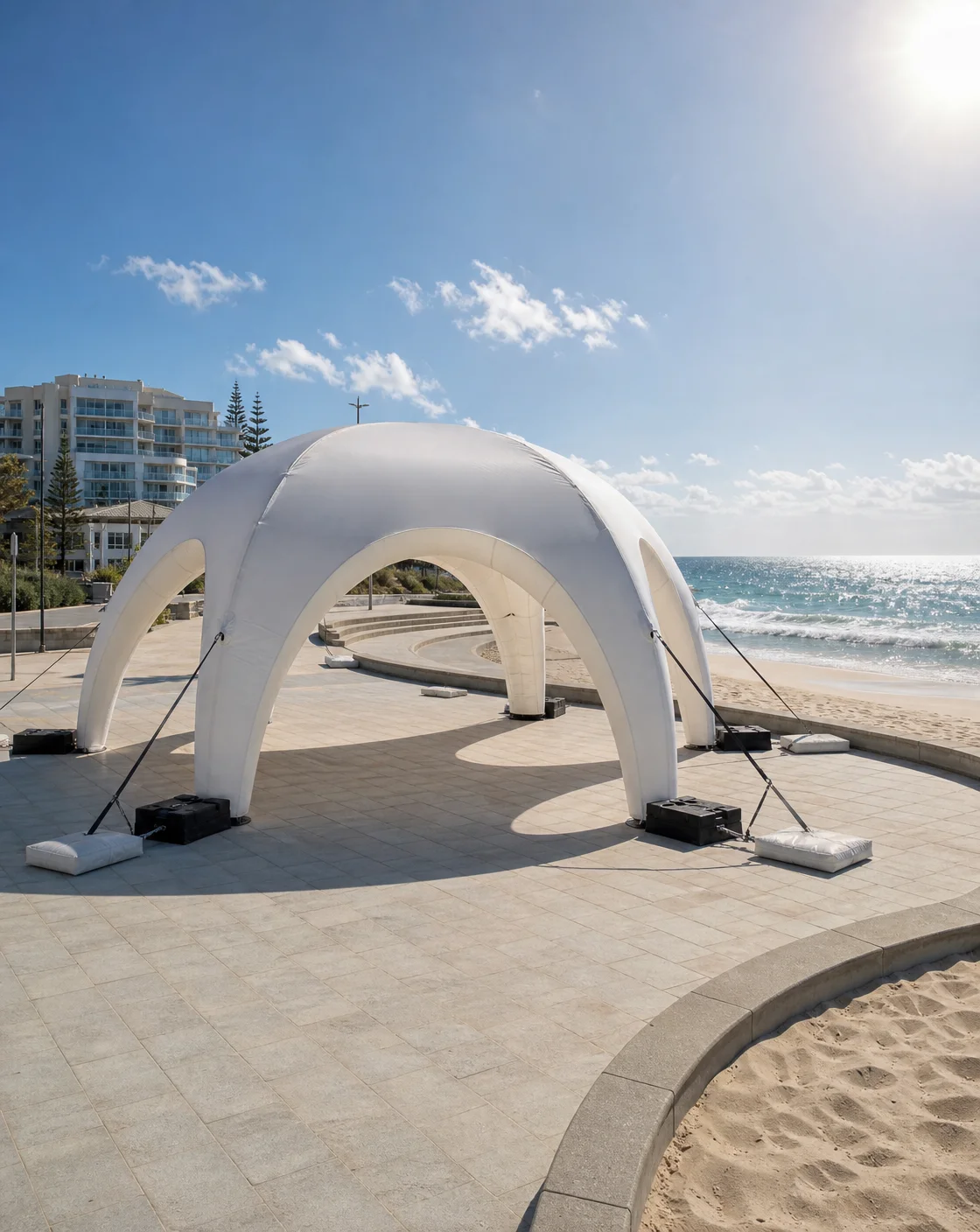
Illustrative planning visual of a beachfront brand activation in Australia with an inflatable structure anchored on a promenade.Illustrative planning visual

Direct answer

In Australia, the site context—rather than the product itself—dictates the technical specification of an inflatable installation. Whether deploying a brand pavilion on the Gold Coast or a sculptural activation in Melbourne’s CBD, success depends on analyzing the interplay between four environmental variables: UV intensity, thermal peaks, wind patterns, and coastal humidity. At InflatPro, we review each project against the "site brief" to ensure the deployment strategy is resilient to the Australian climate.

Key takeaways

  • Brief-Led Specification: Material choice should be driven by the specific climate of the installation site.
  • Anchoring Strategy: Ground conditions are as important as the inflatable’s size when planning for stability.
  • Ongoing Operation: Factor in the venue’s daily operational plan for managing weather-related variables.
On this page

Navigating the Australian Climate

  • High UV and Solar Gain: Materials must be specified to resist color degradation and handle the thermal expansion of internal air during hot Australian days.
  • Coastal Environments: Installations in cities like Sydney or Perth must account for salt-laden air and higher humidity levels, affecting both material feel and maintenance.
  • Wind and Gusts: Open-air sites require a robust anchoring strategy tailored to the local wind climate.

Site-Specific Integration

The relationship between the inflatable and its surroundings is critical. We analyze ground conditions—whether concrete, grass, or sand—to determine the optimal anchoring method. This ensures that the installation remains a safe, stable landmark throughout the event duration.

Professional Boundaries and Compliance

Note: Technical specs, including wind load ratings and ballast requirements, are determined based on the specific project brief. All safety, structural, and environmental compliance measures must be reviewed and confirmed by the site operator and qualified local professionals.

Frequently asked questions

Questions to resolve before specification.

Why does the Australian site context lead the specification?

In Australia the site context, not the object alone, determines the technical specification. UV intensity, thermal peaks, wind patterns, and coastal humidity are read together against the actual site brief.

How are coastal sites handled?

Coastal locations bring salt-laden air, higher humidity, and wind exposure. Material selection and maintenance planning follow the specific coastal site rather than a one-size-fits-all outdoor rule.

Who confirms the anchoring method for the ground conditions?

The site operator and qualified local professionals confirm the anchoring method against the actual ground surface, whether concrete, grass, sand, or another site condition.

Project consultation

Discuss the brief before the format is fixed.

Send the current design direction, intended dimensions, installation location, and event or launch date. The form accepts early references as well as developed artwork.

Discuss Your Project

Product directions to consider

These are conceptual design references, not evidence of local sales or completed projects. The fit depends on the brief and site.

Browse all product directions
