
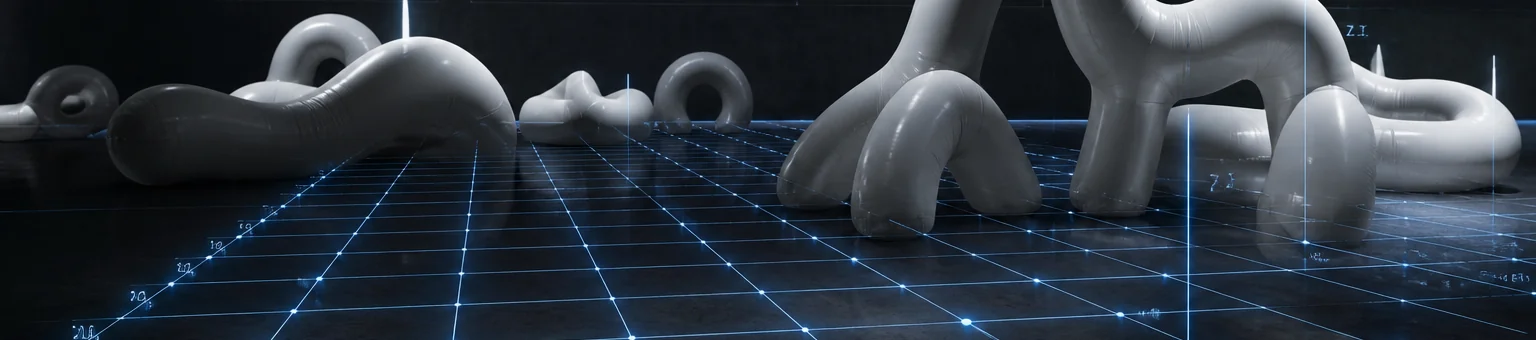
Structural Engineering / Large-Scale Fabrication
Structural Stability Analysis of 22-Meter Asymmetric Air-Volume Monolith
01 / Engineering Abstract
This study documents the structural design and fabrication logic of a 22-meter height asymmetric inflatable structure. The primary objective was to maintain aerodynamic stability under external wind loads exceeding 18m/s (Force 8) while preserving a non-spherical geometric profile with multiple cantilevered air-chambers.
Technical Specifications
| Parameter | Metric Value | Verification Standard |
|---|---|---|
| Structure height | 22.4 meters | Laser Measurement (Leica RTC360) |
| Footprint area | 145.2 m² | CAD Layout Verification |
| Internal pressure | 2.5 - 3.8 kPa | Real-time Sensor Monitoring (IoT) |
| Total weight (airless) | 840 kg | Industrial Scaling |
| Wind load resistance | Up to 65 km/h | CFD Simulation (Ansys Discovery) |
Structural Simulation & Aerodynamics
Traditional inflatable geometry relies on spherical tension. This 22m monolith utilized Internal Ribbon-Wall Technology (IRW) to counteract external turbulence.
- CFD Analysis: Computational Fluid Dynamics (CFD) was employed to identify high-pressure zones on the windward side.
- Pressure Gradient Management: An automated multi-chamber blower system adjusts internal kPa based on real-time external anemometer data to prevent structural collapse or skin deformation.
Material Investigation
The project utilized specialized technical textiles optimized for tensile strength and UV degradation resistance.
- Primary material: 0.9mm High-Tenacity Technical TPU (Thermoplastic Polyurethane).
- Tensile strength: 3200 N / 50mm (ISO 1421).
- Tear resistance: 480 N (ISO 4674-1).
- Light translucency: 38% (Optimized for internal 4500K LED diffusion).
Fabrication Logic
- Seam engineering: 100% High-Frequency Ultrasonic Welding. Double-reinforced overlap joints at primary stress points.
- Anchoring protocol: 12-point ground anchoring system with 2,500kg load-rated ballasts per point.
- Inflation duration: 42 minutes to full operating pressure (Standard ambient conditions).
06 / Engineering Conclusion
The successful deployment of the 22m monolith confirms that through IRW technology and automated pressure monitoring, large-scale asymmetric air-volume structures can achieve structural performance equivalent to semi-permanent architectural installations.
Questions this study answers
How was the 22-meter asymmetric structure stabilized?
The study describes Internal Ribbon-Wall Technology, automated multi-chamber pressure management, CFD analysis, and a 12-point ground anchoring system with load-rated ballasts.
What wind-load value is listed in this study?
The technical specification table lists wind load resistance up to 65 km/h, verified through CFD Simulation (Ansys Discovery).
What reference document supports a new structural review?
The page links to the Structural Review Framework PDF. A new project still requires confirmed geometry, site exposure, and anchoring inputs.
Reference Documents