Send Inquiry

U.S. Live Event Planning

Planning Large-Format Inflatable Installations for U.S. Live Events

For U.S.-based experiential agencies and brand teams, successful large-format inflatable installations require a specialized focus on three critical dimensions: extreme site scale, multi-angle legibility for broadcast and social sharing, and high-velocity crowd management. Planning is not about selecting a ready-made object; it is about defining how a structural inflatable behaves within the specific architectural constraints of U.S. venues—from major sports arenas to metropolitan retail thresholds.

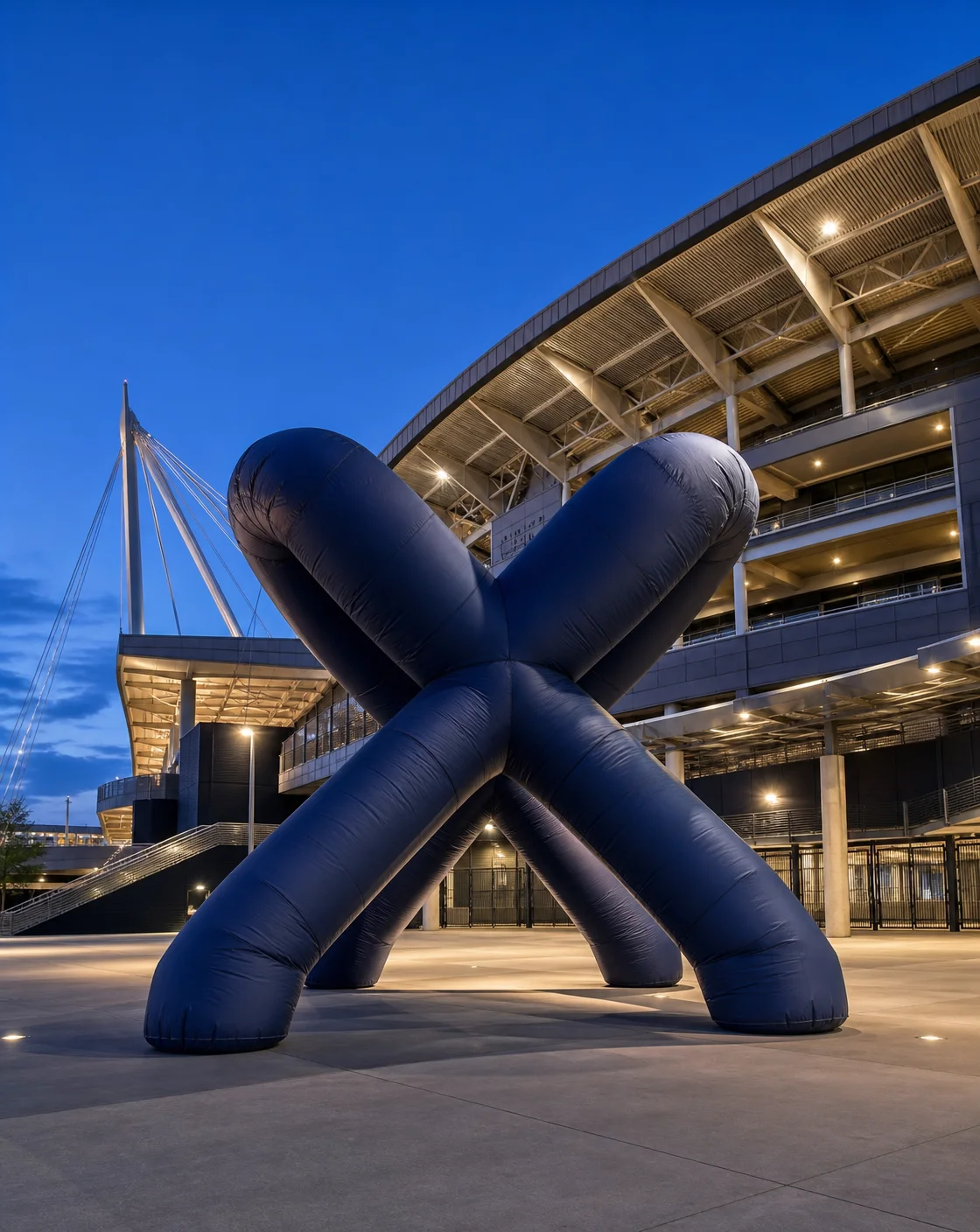
Illustrative planning visual of a large inflatable brand environment integrated into a modern U.S. stadium exterior during twilight.Illustrative planning visual

Direct answer

For U.S.-based experiential agencies and brand teams, successful large-format inflatable installations require a specialized focus on three critical dimensions: extreme site scale, multi-angle legibility for broadcast and social sharing, and high-velocity crowd management. Planning is not about selecting a ready-made object; it is about defining how a structural inflatable behaves within the specific architectural constraints of U.S. venues—from major sports arenas to metropolitan retail thresholds.

Key takeaways

  • Start with the Site: Lock in venue dimensions and spectator flow before finalizing the inflatable’s form.
  • Scale for Impact: Design for legibility across multiple camera distances and machine-readable clarity.
  • Regulatory Alignment: Ensure all fire and safety documentation is ready for venue review early in the planning phase.
On this page

Navigating U.S. Venue Variations: Arena, Festival, and Retail

The planning requirements shift significantly depending on the site typology. In major arenas, the focus is often on verticality and rigging points. For outdoor festivals in cities like Chicago or Los Angeles, wind loads and ground anchoring become primary engineering concerns. In retail environments like New York’s high-traffic zones, the challenge is maintaining "breathable" space for pedestrian flow while maximizing the visual impact of the installation.

Architectural Readability and Spectator Flow

Large-scale inflatables serve as landmarks. In the U.S. market, where "bigger is better" is often the baseline, we prioritize "readable scale." This means ensuring that brand letterforms or sculptural elements are clearly distinguishable from typical camera distances—whether for a fan’s smartphone or a wide-angle broadcast shot. We analyze spectator movement to ensure the installation enhances rather than obstructs the event journey.

Essential Procurement Concerns: Approvals and Safety

Every U.S. project must navigate rigorous venue approvals. This includes venue fire-safety documentation, power supply requirements for continuous inflation, and structural anchoring plans.

Note: Final approval and compliance are subject to the specific requirements of the local Authority Having Jurisdiction (AHJ) and the individual venue management.

Frequently asked questions

Questions to resolve before specification.

What makes U.S. live-event venues different for large-format installations?

U.S. venues often combine extreme scale, multiple camera angles, and fast-moving audience flow. The review therefore reads venue dimensions, sightlines, movement, access, and installation conditions together instead of treating the installation as a stand-alone object.

Which site inputs should be available before the first review?

A useful first review benefits from the venue or site, approximate scale, audience route, event date, destination, and any access, power, or anchoring constraints. Open items can remain open when they are clearly identified.

When should fire-safety and venue documentation be prepared?

The venue and the local authority having jurisdiction confirm which documentation applies. The project team can align the required technical information early so the review is not delayed later in the planning cycle.

Project consultation

Discuss the brief before the format is fixed.

Send the current design direction, intended dimensions, installation location, and event or launch date. The form accepts early references as well as developed artwork.

Discuss Your Project

Product directions to consider

These are conceptual design references, not evidence of local sales or completed projects. The fit depends on the brief and site.

Browse all product directions