
Send Inquiry

Canadian Indoor / Outdoor

Indoor/Outdoor Coordination for Canadian Brand Activations

The core of successful Canadian brand activations is the seamless coordination of indoor and outdoor site variables. In a market where a single campaign might move from an outdoor summer festival to an indoor winter arena, the planning process must address four technical pillars: seasonal adaptability, infrastructure access (power and anchoring), fire safety standards, and spectator movement.

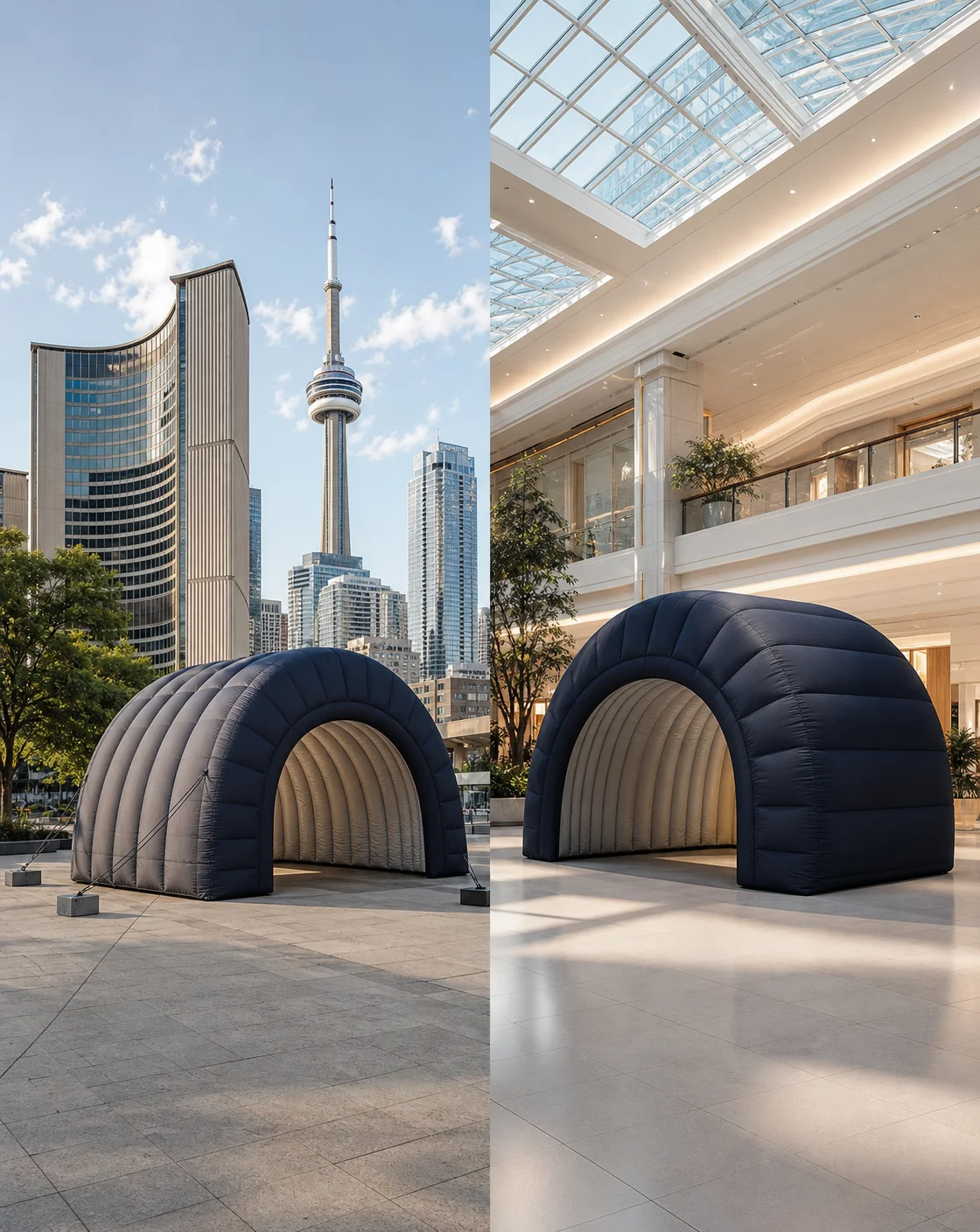
Illustrative planning visual of a brand activation concept adapted for both a sunny outdoor plaza and a well-lit indoor atrium.Illustrative planning visual

Direct answer

The core of successful Canadian brand activations is the seamless coordination of indoor and outdoor site variables. In a market where a single campaign might move from an outdoor summer festival to an indoor winter arena, the planning process must address four technical pillars: seasonal adaptability, infrastructure access (power and anchoring), fire safety standards, and spectator movement. At InflatPro, we review these site "conditions" to ensure the inflatable design is functionally optimized for the Canadian environment.

Key takeaways

  • Assess the Season: Your deployment method (anchoring/power) will change between Canada's winter and summer.
  • Prioritize Flow: Design the inflatable's footprint to enhance the visitor experience without creating bottlenecks.
  • Infrastructure First: Lock in power and anchoring requirements with the venue team during the initial design phase.
On this page

Seasonal Transition and Adaptability

  • Summer Outdoor Activations: Focus on weather resilience, including rain management and UV stability for festivals and open-air events.
  • Winter Indoor Deployments: Shift focus to venue clearance heights, fire-safety documentation, and floor-based anchoring solutions that do not damage the surface.

Site Infrastructure and Spectator Safety

Whether in a stadium courtyard or a retail atrium, the inflatable must integrate with existing site flow.

  • Power Continuity: Ensure dedicated circuits are available for the continuous inflation system.
  • Anchoring and Ballast: Coordinate with the venue to determine if ground stakes, weighted ballasts, or internal water weights are required for stability.

Safety and Professional Responsibility

Note: Every project is reviewed against its unique site brief. Material fire ratings, structural integrity, and anchoring methods must be confirmed by the venue operator and qualified local professionals.

Frequently asked questions

Questions to resolve before specification.

How do indoor and outdoor builds differ in Canada?

Outdoor summer activations focus on weather resilience and UV stability, while indoor winter deployments shift to clearance heights, fire-safety documentation, and floor-based anchoring that protects the surface.

What infrastructure should be confirmed early?

Dedicated power circuits and the correct anchoring method should be confirmed with the venue team during the initial design phase, before the installation arrives on site.

Who confirms the final safety measures?

Material fire ratings, structural integrity, and the anchoring method must be confirmed by the venue operator and qualified local professionals for the unique site brief.

Project consultation

Discuss the brief before the format is fixed.

Send the current design direction, intended dimensions, installation location, and event or launch date. The form accepts early references as well as developed artwork.

Discuss Your Project

Product directions to consider

These are conceptual design references, not evidence of local sales or completed projects. The fit depends on the brief and site.

Browse all product directions
